
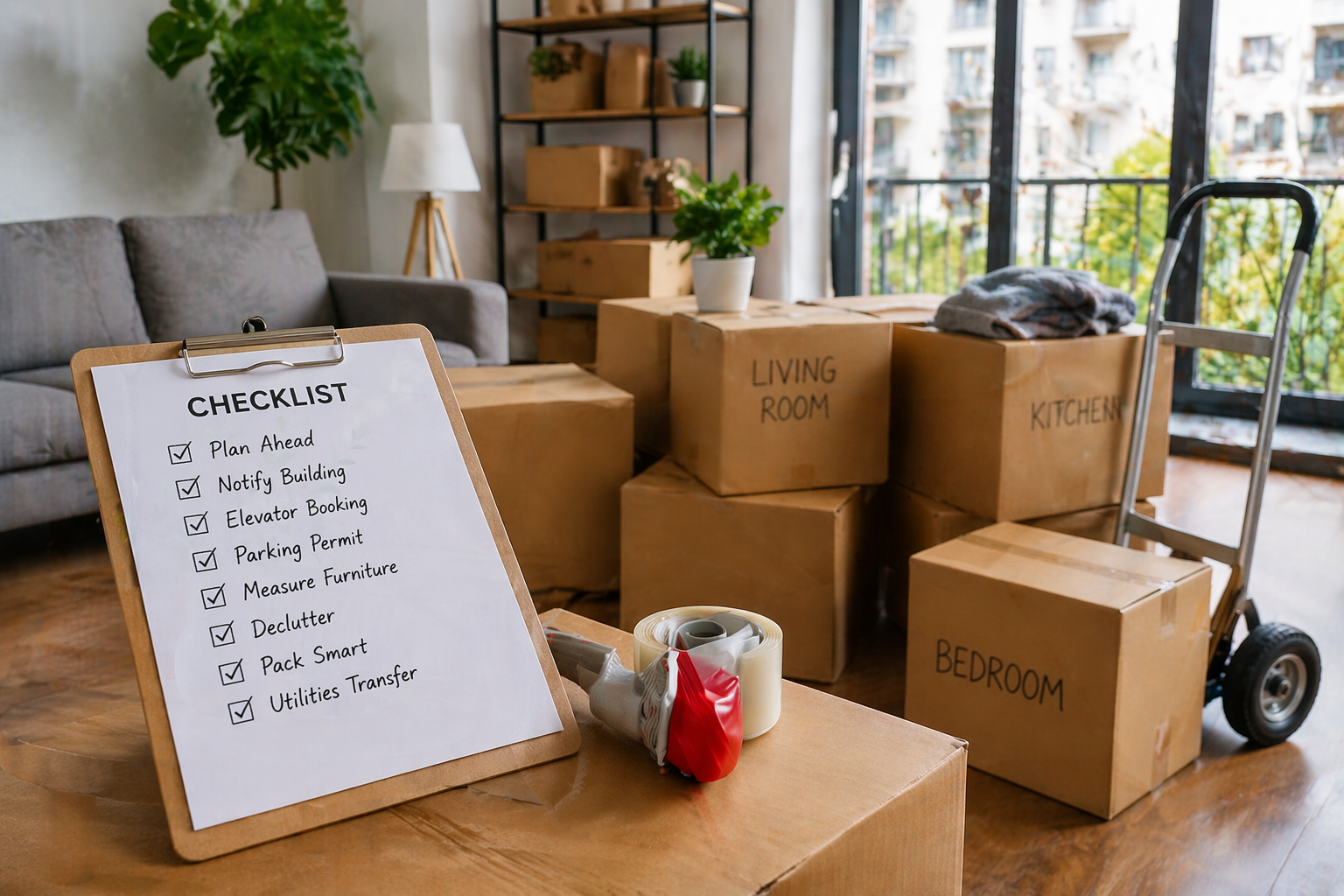
Apartment Moving Checklist: How to Move Into (or Out of) an Apartment
Moving into or out of an apartment comes with a unique set of logistical challenges that a standard moving guide won’t fully address. Narrow hallways, elevator time limits, parking restrictions, building rules, and square smaller footage all add layers of complexity that catch many people off guard.
This apartment moving checklist walks you through everything you need to plan for, from coordinating with your building to maximizing space in your new home, so your move goes as smoothly as possible.
Before the Move: Building Coordination Is KeyOne of the most important parts of moving to a new apartment is working directly with your building management team well before move day. Many buildings have rules that, if ignored, can bring your move to a grinding halt.
Contact building management at both locationsAs soon as your move date is confirmed, reach out to the management at your current and new buildings. Ask about:
Required move-in/move-out times (many buildings restrict moves to business hours)
Elevator reservations , most large buildings require you to book the freight elevator in advance
Parking arrangements for the moving truck (you may need to request a temporary no-parking zone)
Certificate of Insurance (COI) requirements , many buildings require your moving company to provide proof of insurance before allowing access
Any additional fees for elevator use, loading dock access, or building protection
Skipping this step is one of the most common and costly apartment moving mistakes.
Apartment Moving Checklist: Full Timeline6–8 weeks before moving to a new apartment:Measure all furniture against doorways, hallways, and elevator dimensions at your new apartment
Begin decluttering, apartments are typically smaller and have less storage than houses
Research apartment movers experienced with your building type
Request 3+ quotes from moving companies
Review your lease for early termination terms, notice requirements, and move-out conditions
4 weeks before:Confirm elevator reservation and loading dock access at new building
Notify current building management of your move-out date in writing
Begin packing non-essential items
Arrange parking permits or no-parking zones for moving day
Start researching storage options if needed
2 weeks before:Confirm booking with your moving company and provide COI to new building if required
Pack all non-daily-use items
Organize items that won’t fit in the new apartment for donation, sale, or disposal
Transfer or set up utilities at your new address
Moving week:Pack remaining items, leaving out only what you’ll need daily
Prepare your essentials bag (first-night items)
Confirm arrival time with movers
Do a final measurement check for any large pieces you’re unsure about
Navigating Tight Spaces: Stairs, Hallways, and ElevatorsTight spaces are the defining challenge of apartment moves. A piece of furniture that fits in a room doesn’t necessarily fit through the door to get there.

Measure everything
Before moving day, measure the width and height of every doorway, hallway turn, and elevator (including the elevator door and interior). Compare these to the dimensions of your sofa, bed frames, desks, appliances, and other large items. Items that don’t fit will need to be disassembled or left behind.
Disassemble large furniture
Bed frames, desks, shelving units, and sectional sofas are often easier to move disassembled. Keep all screws and hardware in labeled zip-lock bags and tape them to the relevant piece of furniture.
Plan your elevator strategy
If your building has a freight elevator, use it for all large items. Book it for a window that’s longer than you expect to need, elevator moves always take more time than anticipated. If the building only has a passenger elevator, coordinate with management on usage so you don’t disrupt other residents.
Dealing with stairs
If your building or new apartment involves stairs, let your movers know in advance. Stair carries are physically demanding and time-consuming, your quote should reflect this. Furniture sliders, stair dollies, and moving straps can all reduce the effort involved.
Downsizing for an Apartment MoveIf you’re moving from a house to a new apartment, or into a smaller apartment, downsizing is an unavoidable part of the process. Here’s how to do it without regret:
Create a floor plan of your new apartment with accurate measurements and map out where key furniture will go
Anything that doesn’t fit the floor plan gets evaluated: sell, donate, or store
Prioritize multi-functional furniture (beds with storage drawers, ottomans with storage, extendable dining tables)
Digitize documents, photos, and media to reduce physical storage needs
Be honest about what you actually use, closets full of rarely-used items don’t survive well in apartments
Managing Parking and Loading Zone LogisticsParking for a moving truck in urban environments is honestly one of the harder apartment moving challenges. Here’s how to approach it:
Contact your local city or municipality about temporary no-parking permits (often available 2–3 days in advance for a small fee)
Coordinate with your building’s superintendent or property manager for designated loading zones
Have a backup plan for street parking if the primary option falls through
Brief your movers on parking limitations in advance so they arrive with the right vehicle size
Hire Apartment Movers Who Know What They're DoingNot every moving company has experience navigating the specific challenges of apartment moves, elevator restrictions, tight corridors, building management requirements, and urban parking logistics all require specialized skill. Redline Movers provides experienced moving labor and apartment moving help built for exactly these scenarios. Their team handles everything efficiently and professionally, from the initial walk-through to the final item placement in your new apartment.
Frequently Asked QuestionsDo I need to hire professional apartment movers, or can I DIY it?
You can DIY an apartment move, but it’s typically harder than people expect, especially in buildings with elevator restrictions, stairs, and narrow hallways. Professional apartment movers bring equipment (dollies, straps, furniture sliders), manpower, and experience that speeds up the process significantly and reduces the risk of damage or injury.
What if my furniture doesn’t fit through the door?
Measure before moving day, not on it. If something doesn’t fit, you have three options: disassemble it, remove a door (temporarily removing door hinges gives a few extra inches), or accept that it won’t be making the move. Professional movers can often find creative solutions for tricky pieces.
How long does an apartment move typically take?
A studio or 1-bedroom apartment with professional movers typically takes 2–4 hours. A 2-bedroom apartment usually runs 4–6 hours. Add time for elevator waits, distance from truck to unit, and floor level. Your mover should give you a time estimate based on your specific situation.