
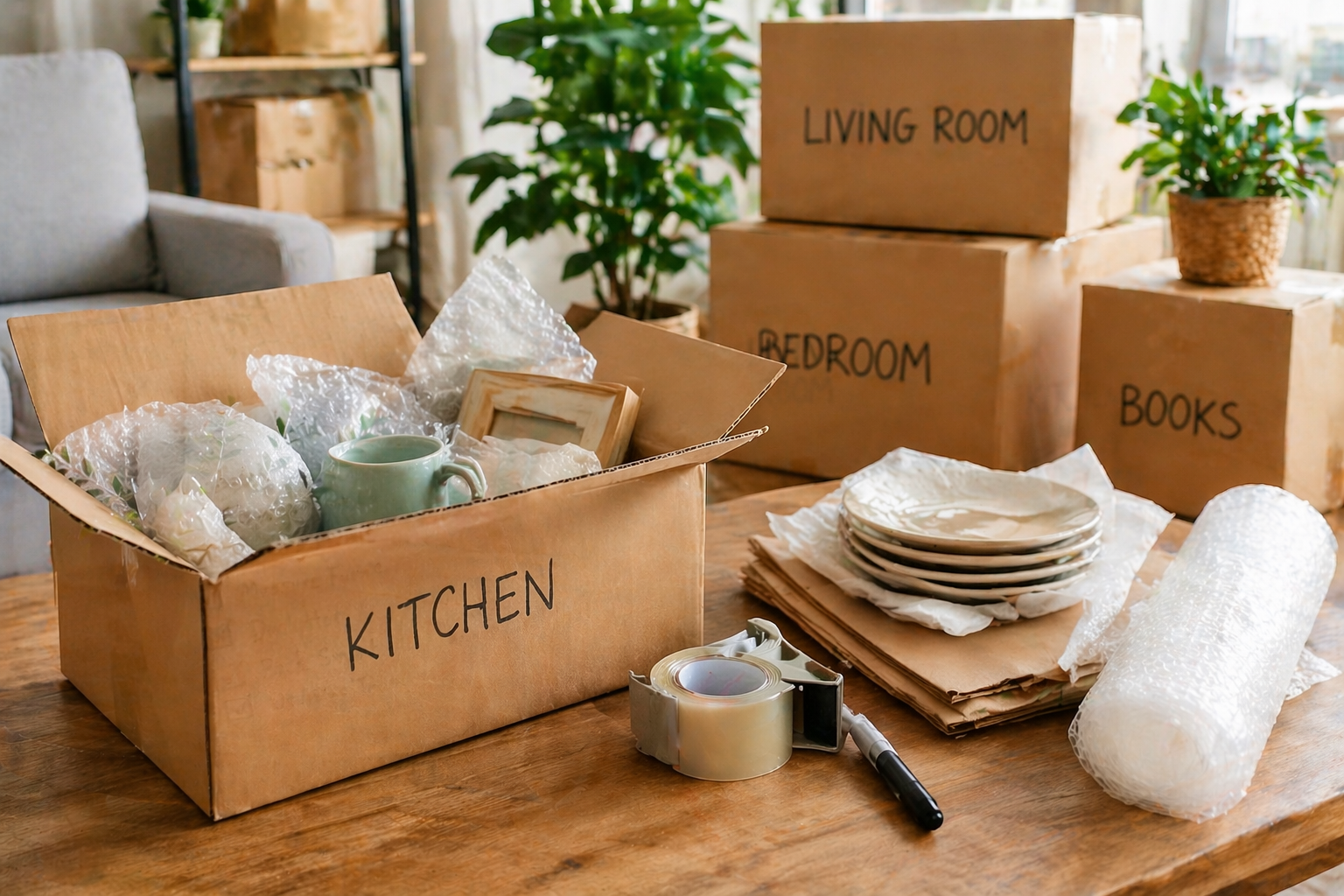
How to Pack for a Move: A Step-by-Step Guide
Packing is one of the most time-consuming parts of any move , and one of the most underestimated. Most people either start too late, run out of the right materials, or end up with boxes that are impossible to find things in. Knowing how to pack for a move properly protects your belongings, saves time, and makes unpacking far less of a nightmare.
Follow this step-by-step guide to pack efficiently, safely, and with the kind of organization that holds up even after a long-distance move.
Step 1: Gather the Right Packing MaterialsBefore you pack a single box, make sure you have all the materials you need. Running out of tape mid-pack is a guaranteed way to lose momentum. Stock up on:
Small, medium, and large moving boxes (never use oversized boxes for heavy items)
Heavy-duty packing tape and a tape gun
Bubble wrap for fragile and breakable items
Packing paper (unprinted newsprint) , ink from newspapers can transfer onto items
Foam packing peanuts or foam pouches for extra cushioning
Stretch wrap / furniture wrap for protecting upholstered pieces
Permanent markers for labeling
Specialty boxes: dish boxes (cell-divided), wardrobe boxes with hanging bars, mirror boxes
You can often find free boxes from grocery stores, liquor stores, or Facebook Marketplace. Just make sure any used boxes are still structurally sound.
Step 2: Declutter Before You Start PackingPacking is the perfect time for a ruthless declutter. Every item you don’t pack is an item you don’t pay to move and don’t have to unpack. Go room by room and sort into four categories: keep, donate, sell, and throw away.
A good rule of thumb: if you haven’t used it in a year and it has no strong sentimental value, it probably doesn’t need to make the trip. This is especially important for bulky items like furniture, large appliances, and old clothing.
Step 3: Pack Room by RoomThe most common packing mistake is mixing items from different rooms in the same box. It seems efficient in the moment, but it makes unpacking chaotic and disorganized.
Pack one room at a time, from least-used to most-used spaces. A good order:
Storage rooms and attic/basement items first
Books, decorative items, off-season clothing
Guest room and secondary bedrooms
Living room
Kitchen and dining room
Master bedroom
Bathrooms last (many items you’ll need right up until moving day)
Keep each box to a single room and label it clearly with both the room name and a brief description of contents.
Step 4: How to Pack Fragile ItemsFragile items require more attention, more materials, and more time. Don’t rush this step. Follow these packing tips for breakables:
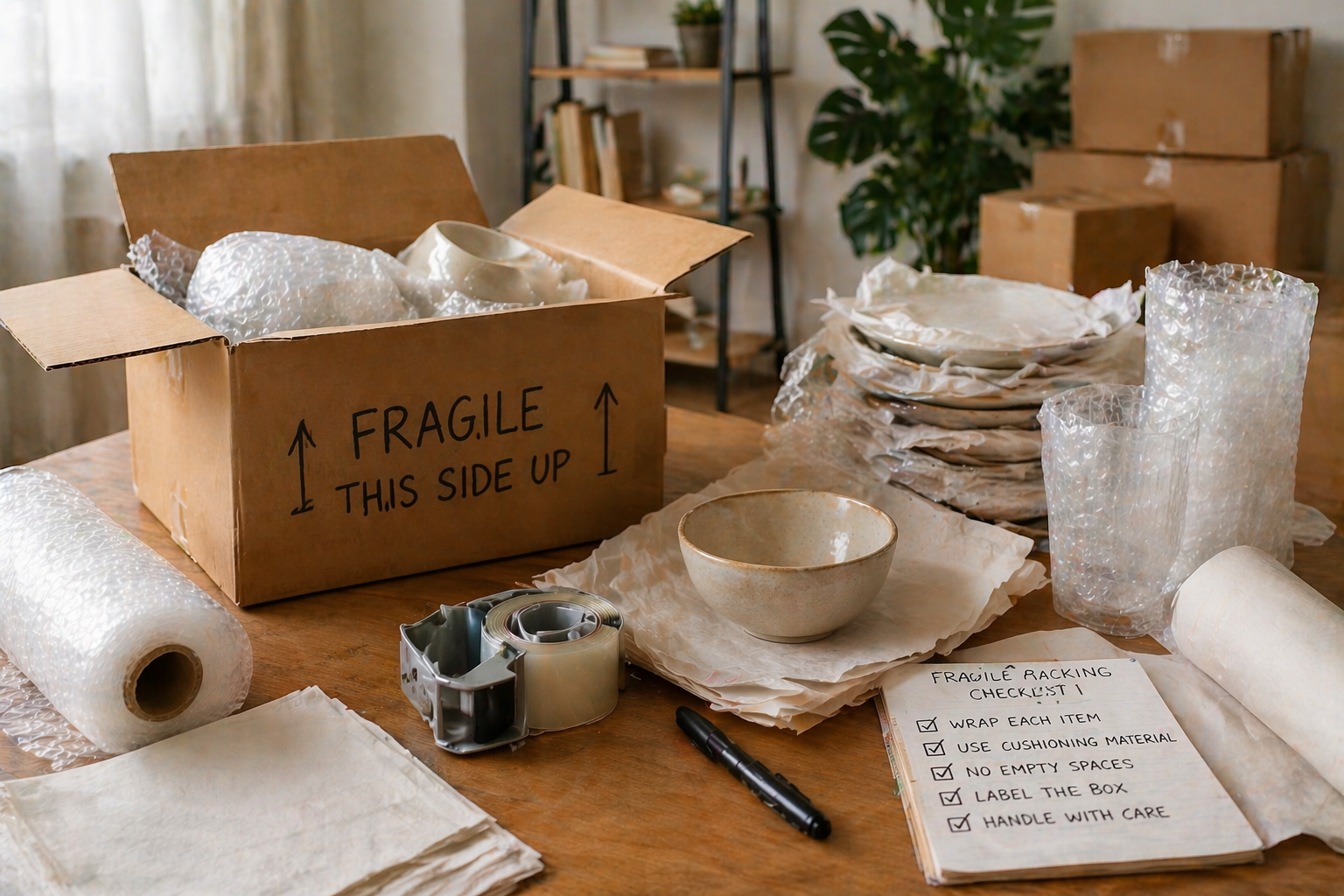
Dishes and plates
Pack plates vertically (on edge), not stacked flat. Wrap each plate individually in packing paper, then bundle 3–4 wrapped plates together for an additional layer. Line the bottom of the box with crumpled paper before placing items, and fill any gaps so nothing shifts in transit.
Glasses and stemware
Wrap each glass individually, starting at the base and rolling toward the rim. Place glasses upright in a cell-divided dish box. Never stack unprotected glasses on top of each other.
Mirrors, artwork, and framed photos
Use mirror/picture boxes sized as close to the item as possible. Tape an ‘X’ across glass surfaces before wrapping , if the glass does crack, the tape holds the shards in place. Pack vertically and mark as fragile.
Electronics
Ideally, use original packaging. If unavailable, wrap in anti-static bubble wrap and use a double box (pack the wrapped device in a snug inner box, then place that box inside a larger box with padding on all sides). Remove and separately bag any cables.
Step 5: Pack Boxes CorrectlyHow you fill a box matters as much as what you put in it. Poorly packed boxes lead to crushed contents, broken items, and boxes that collapse mid-stack. Follow these rules:
Heavy items (books, tools) go in small boxes , never fill large boxes with heavy items
Fill every box to capacity to prevent crushing , use packing paper to fill gaps
Put heavier items on the bottom, lighter items on top
Never let packed boxes exceed 30–35 lbs to protect both your belongings and your back
Seal all boxes with two strips of tape along the seam, plus tape over the edges
Step 6: Label Every Box ClearlyClear labeling is one of the most underappreciated packing tips , and one that pays off enormously during unloading and unpacking. Mark every box with:
Destination room (e.g., ‘Kitchen’, ‘Master Bedroom’, ‘Living Room’)
A brief description of contents (‘dinner plates’, ‘books’, ‘bathroom towels’)
‘FRAGILE’ and directional arrows (‘THIS SIDE UP’) on all fragile boxes
Priority level if helpful (‘Open First’ for essentials boxes)
Label on the top and at least one side of every box. When boxes are stacked, you’ll typically only see one side , make sure that side is labeled.
Common Packing Mistakes to AvoidOverpacking boxes
Boxes that are too heavy or too full are a double hazard: they’re harder to carry and more likely to burst at the seam. Keep boxes manageable and fill gaps with packing paper rather than cramming more items in.
Skipping the label
An unlabeled box becomes a mystery box, and mystery boxes are a nightmare to unpack. Label every single box, every single time.
Packing valuables with regular items
Documents, jewelry, passports, laptops, and other irreplaceable items should travel with you personally , not in the moving truck.
Using inadequate materials
Old boxes from the grocery store, single layers of newspaper, or insufficient tape are false economies. Damage from poor packing costs far more than proper materials.
Starting too late
Most people pack too slowly or underestimate how long it takes. A typical 3-bedroom home can take 30–50 hours to pack properly. Start at least 3–4 weeks out.
Professional Packing Services: When It's Worth ItIf you’re running out of time, moving high-value items, or simply want peace of mind that everything will arrive safely, Redline Movers offers fully managed professional packing services where an experienced team handles everything from wrapping fragile items to specialty crating for artwork and antiques. Every item is inventoried and professionally packed to withstand the rigors of transit , giving you one less major task to manage before your move.
Frequently Asked QuestionsHow early should I start packing for a move?
For a typical 2–3 bedroom home, start packing non-essential items 4–6 weeks before your move. Begin with seasonal items, books, and décor, then work toward everyday essentials in the final week. Starting early reduces last-minute stress significantly.
What items should I NOT pack in moving boxes?
Do not pack hazardous materials (paint, propane, batteries, cleaning chemicals), perishable food, plants, pets, medications you currently need, valuable documents, or irreplaceable items. Most movers will also refuse flammable or combustible items for safety and liability reasons.
How do I pack without running out of boxes?
Over-estimate your needs. Most people underestimate box counts by 30–40%. Beyond boxes, use your own luggage, laundry baskets, and bins as moving containers. Towels, linens, and clothing make excellent padding material and reduce the number of specialty boxes you need.