

Moving Tips for Families: How to Make Your Family Move Easier
Moving with a family is a completely different experience from moving as a single person or couple. You’re managing children’s emotions, maintaining some semblance of routine, keeping pets calm, coordinating schedules, and trying to stay organized , all at the same time. The good news is that with the right approach, a family move can be a genuinely positive experience, even a memorable one for your kids.
These moving tips for families are designed to make the transition smoother, less stressful, and more successful for everyone involved.
Start Conversations Early: Preparing Children for the MoveHow you introduce the idea of moving to your children matters enormously. Avoid springing it on them last-minute or treating it as a non-negotiable announcement without space for questions. Instead:
Tell children as early as reasonably possible , this gives them time to adjust to the idea
Frame the move positively: talk about the new home, new experiences, and new possibilities
Acknowledge their feelings honestly. It’s okay for a child to feel sad, anxious, or angry about leaving friends and familiar spaces
Answer their questions directly and age-appropriately
Involve them in the process: let older children pack their own boxes, choose colors for their new room, or research activities in the new area
Children tend to take their emotional cues from parents. If you approach the move with confidence and optimism, they’re more likely to follow suit.
Family Moving Checklist: What to Do and When8+ weeks before the move:
Discuss the move with your children and answer all questions
Research schools, pediatricians, and family-friendly activities in the new area
Begin decluttering , involve kids by letting them choose what goes and what stays
Request school records and medical records to transfer to new providers
Research and book a moving company experienced with family moves
4–6 weeks before:
Notify children’s schools of the withdrawal date
Begin packing toys, books, and seasonal items , leaving favorites accessible
Arrange playdates or special activities to help older kids say goodbye to friends
Prepare change-of-address notifications (school, pediatrician, subscriptions)
2 weeks before:
Pack children’s rooms, leaving out a small selection of favorite toys and activities for moving week
Confirm moving day plan for managing kids and pets
Prepare a ‘kids essentials bag’ for each child
Confirm enrollment or registration at new school if applicable
Moving week and day:
Explain the moving day schedule to children so they know what to expect
Arrange for children and pets to be cared for by a trusted person if possible
Keep favorite comfort items and snacks accessible throughout the day
Celebrate small wins throughout the day to keep morale high
Packing Family-Friendly Items: What to PrioritizeWhen packing for a family move, not everything is equal. Some items need special handling:
Children’s essentials bag
Each child should have a clearly labeled bag or backpack that travels with them (not on the truck) containing their absolute must-haves: a favorite stuffed animal or toy, a book or tablet, snacks, a change of clothes, and any comfort items. This bag should be their anchor on moving day and the first night in the new home.
School supplies and important documents
Keep school records, medical records, immunization histories, and birth certificates in a dedicated folder that travels with you , not in a moving box. You may need these documents sooner than you expect.
Medications and medical equipment
Any regular medications for family members (including children and pets) should travel with you personally. Do not pack them in moving boxes.
Sentimental items
Children often have specific items , a stuffed animal, a particular blanket, a cherished toy , that are irreplaceable. Treat these with the same care as high-value items and keep them in the personal essentials bag.
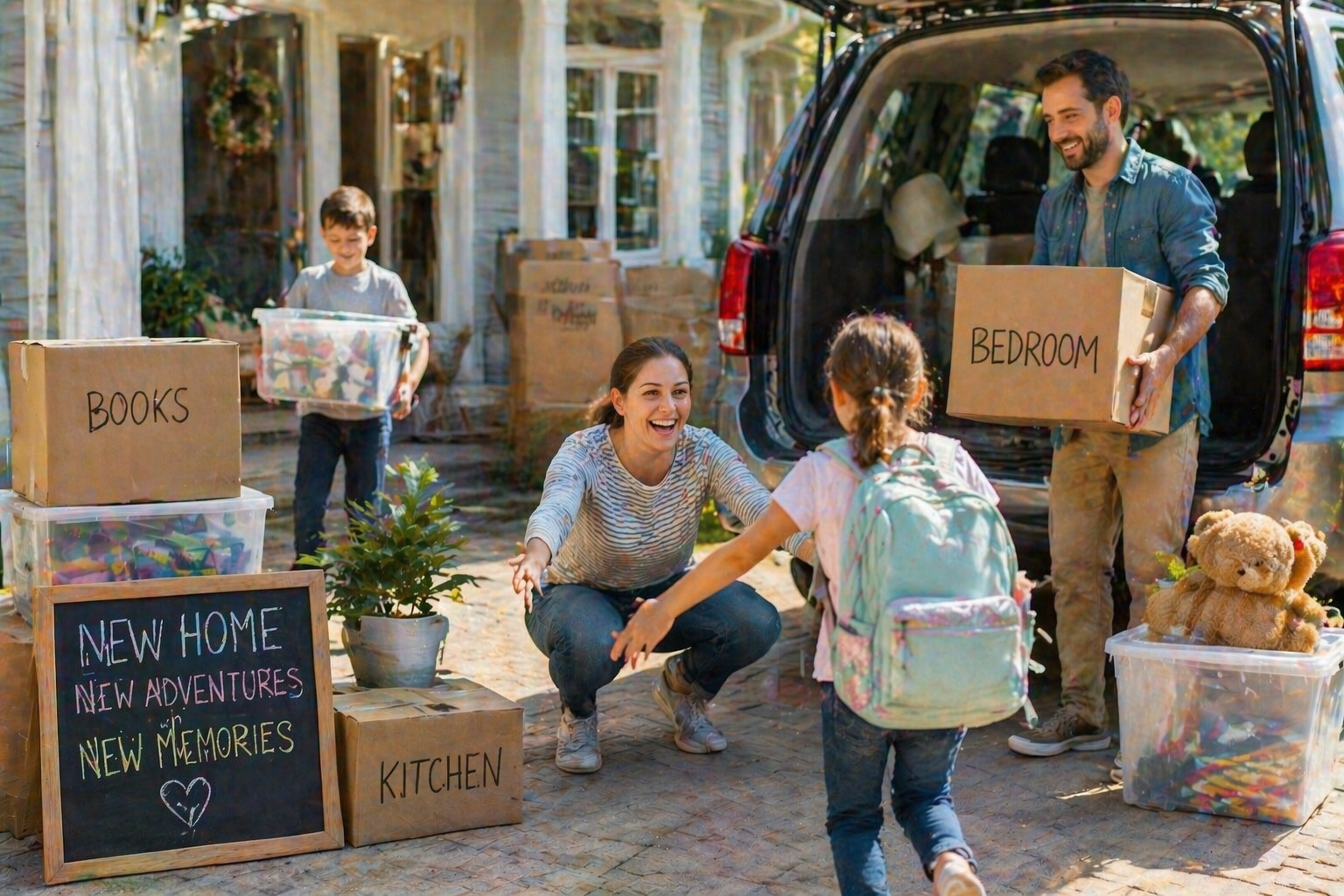
Staying Organized as a Family During the Move
Staying organized with multiple people, multiple rooms, and multiple needs requires a system. Here’s what works:
Use a family moving binder or digital shared document to track tasks, contacts, deadlines, and notes
Color-code boxes by family member or room , e.g., yellow labels for the kids’ playroom, green for the master bedroom
Assign age-appropriate tasks to children (packing their own bookshelf, labeling boxes, keeping inventory)
Hold brief daily check-ins in the weeks before the move to review what’s done and what’s next
Create a family moving calendar with key milestones visible to everyone
When everyone in the family has a role and understands the plan, the move becomes a shared project rather than something that’s happening *to* them.
Maintaining Routines Throughout the MoveRoutine is the antidote to transition anxiety, especially for children. Even during the most chaotic periods of a move, try to preserve the elements of your daily routine that matter most:
Keep consistent bedtimes, even if the environment is different
Maintain regular mealtimes , familiar foods in unfamiliar situations are comforting
Preserve after-school or weekend activities where possible
Continue regular family rituals: movie nights, reading together, morning coffee
You won’t be able to maintain everything , and that’s okay. But protecting even 2–3 core routines creates a sense of continuity that helps everyone adjust more quickly.
Moving With Pets: Keeping Your Animals Safe and ComfortablePets are family members, and they feel the disruption of moving just as intensely as humans , sometimes more so.
In the weeks before the move:
Gradually introduce moving boxes and packing activity so they’re not overwhelmed on moving day
Keep their feeding schedule, exercise routine, and bedtime consistent
Ensure their records, vaccination history, and any medications are organized and accessible
If moving to a new city, research and pre-select a veterinarian
On moving day:
Keep pets in a quiet, closed-off room away from the loading activity
Ensure they have food, water, and their bed or familiar items
Do not let pets roam freely with exterior doors open , the risk of escape is very high
For anxious animals, speak to your vet in advance about calming options
Settling in at the new home:
Set up their space (bed, food/water bowls, toys) before releasing them to explore
Allow them to investigate at their own pace without forcing interaction with new spaces
Be prepared for a few days of unusual behavior , this typically resolves as they adjust
Let the Professionals Handle the Heavy LiftingFamily moves have enough moving parts without you also worrying about logistics and heavy lifting. Redline Movers is a trusted local moving company for families that understands the unique demands of a family relocation , multiple rooms, irreplaceable items, tight schedules, and the emotional weight of it all. Their team handles the physical and logistical heavy lifting while you focus on your family. Get in touch to discuss your move and get a customized quote.
Frequently Asked QuestionsHow do I help my child adjust after moving to a new city?
The adjustment period is real, and it takes time , typically 3–6 months for most children to feel settled. Help by enrolling them in activities they enjoy as soon as possible, encouraging new friendships, and maintaining familiar routines. Stay emotionally available and check in regularly about how they’re feeling without pressuring them to be ‘fine.’
Should I let my kids help pack?
Yes , with age-appropriate tasks. Children ages 5 and up can pack their own books and non-fragile toys with supervision. Older children and teens can take on more responsibility, including labeling boxes and creating their own inventory list. Involvement reduces anxiety and gives them a sense of agency over a process that largely happens around them.
What’s the best time of year to move with a family?
Summer (June–August) is the most popular time for family moves because it avoids disrupting the school year. The tradeoff is that moving companies are at peak demand and prices are higher. If you can move in spring or fall, you'll often find better availability and pricing , and transferring schools mid-year is more manageable than people expect, especially with some advance coordination.